
Monterey 72-Hour Release List
No separate official Monterey County Sheriff's 72-hour release feed was found in the reviewed source set. The county's official public jail roster source is the Sheriff's In Custody Log. That log is a current-custody view. It should not be treated as a complete three-day historical archive of people released from the Monterey County Jail.
The 72-hour window still matters. A person may leave jail late Friday, after a weekend court order, after bail processing, or after a short sentence is satisfied. By Monday or the next business day, the person may no longer appear on the current log. The correct Monterey County approach is to use the log as a starting point, then confirm with jail information, the court portal, California VINE, or a public-records request to the Sheriff's Office.
Check Monterey Three-Day Releases
The three-day release path differs from the 24-hour page because it puts more weight on records that survive after the live roster changes. A same-day check may still catch the person in the Sheriff's current log. A 72-hour check often needs court and records sources because the jail event may have already fallen out of the public current-custody view.
- Start with the Monterey County Sheriff's In Custody Log and note whether the person is still shown.
- For a county jail release, call Monterey County Jail information at (831) 755-3782 when the timing or custody status must be clarified.
- Search the Monterey County Superior Court case search and the public portal for bail, disposition, sentence, remand, warrant, and next-hearing entries.
- Use California VINE for custody-status clues and release notifications when the person appears in a covered feed.
- Request the release information through the Sheriff's NextRequest public-records portal if the online trail does not answer the time and manner of release.
- Move to CDCR CIRIS, BOP, ICE, or DHS-VINELink if the person left the county jail by transfer.
For a same-day-only search, use the 24-Hour Release List. For one named person with a longer custody path, use the main Monterey County released inmates search path.
Monterey 72-Hour Fields
The confirmed fields in the accessible Sheriff's In Custody Log text are useful for identity matching, but they are not release-history fields. A person who left jail within the last three days may need a release record from the Sheriff's Office or a court entry that explains why custody ended. That is especially true where the public log no longer displays the booking.
| Field or record | Use in a 72-hour search |
|---|---|
| Booking name | Matches the person to the jail entry before checking court or records channels. |
| Date of birth, sex, age | Reduces common-name errors over a three-day search span. |
| Custody unit, agency, charges | Shows the active custody context while the person remains listed. |
| Court register entries | May show bail, sentence, probation, remand, dismissal, warrant, or other action after release. |
| Time and manner of release | Requested from Sheriff records under Government Code section 7923.610 if not shown online. |
California law supports a specific request for release information. Government Code section 7923.610 includes arrest information such as booking time, bail amount, current holding location, and time and manner of release, subject to listed exceptions. A narrow request is stronger than asking for broad investigative files.
Monterey Court Confirmation
The Monterey County Superior Court criminal records page is important for a 72-hour release check because court records often last longer than a current jail roster entry. The court states that remote electronic access includes criminal indexes, calendars, and registers of action, with criminal electronic information available from November 1992 through today.
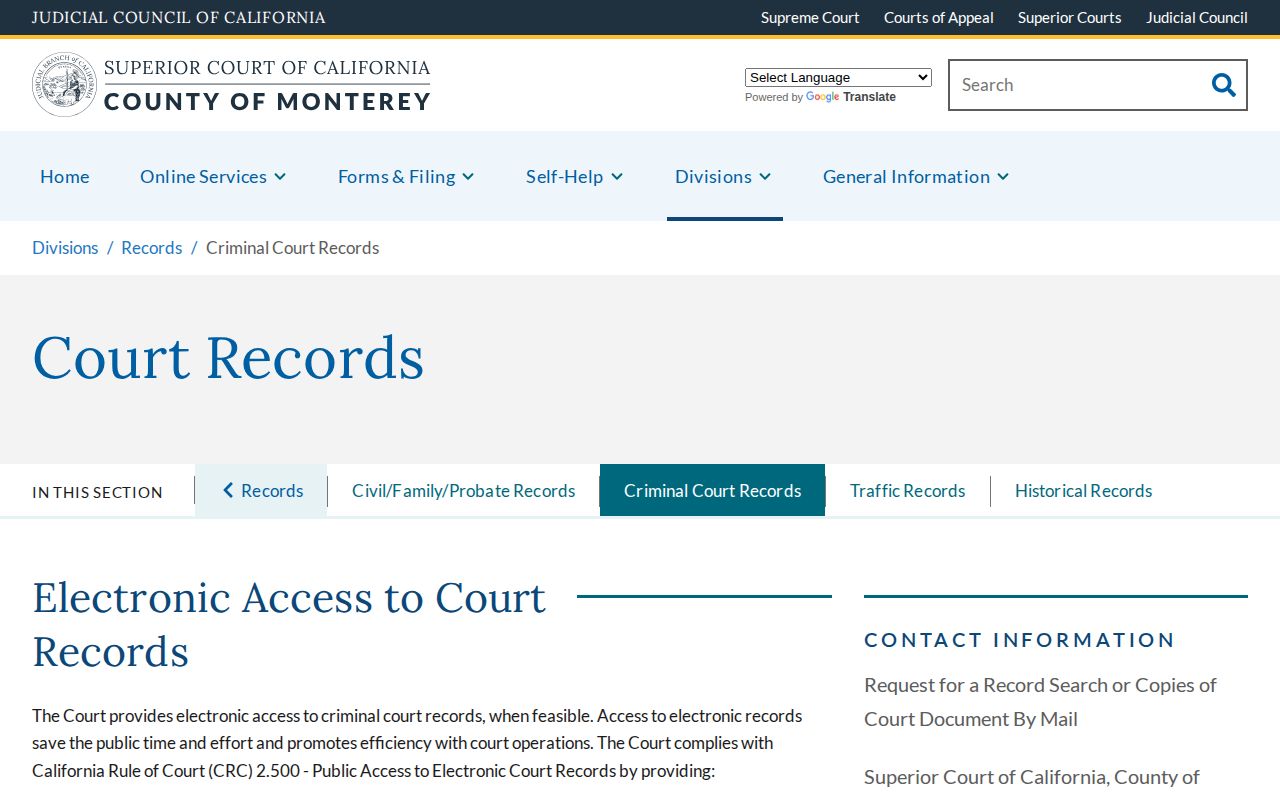
The court portal can explain the release event even when it is not a jail feed. Look for bail changes, sentencing, probation terms, remands, warrants, dismissals, and completion entries. The court record should be reconciled with the Sheriff release record because the court explains legal status while the Sheriff confirms jail custody.
Weekend Release Timing
A three-day Monterey County release check is most useful after weekends, holidays, or late-day processing. A person can post bail, be released by court order, finish a short jail term, or be moved to another custody system while public web sources update at different times. The Sheriff's research did not publish a cadence for the In Custody Log, so avoid assuming that every change appears immediately or stays visible for a fixed period.
For a Friday-to-Monday search, compare the jail log, VINE status, and court portal before filing a records request. If the person had a Monterey County case but was sentenced or transferred to state prison, use CDCR. If a federal hold, U.S. Marshals transfer, or immigration detainer is involved, use BOP, ICE, or DHS-VINE. A county jail release may be only one step in the custody chain.
Official Sources to Trust
Commercial or unofficial booking pages may claim to show Monterey County bookings or recent releases. They are not the official release record and may not show later court disposition, sealing, transfer, or the true release type. Use them, at most, as a lead to check against official records. Do not rely on them as the final release confirmation.
| Custody type | Official Monterey or agency source | Best use |
|---|---|---|
| County jail | Sheriff In Custody Log, jail information, Sheriff records | Current custody and release-record confirmation. |
| County court case | Monterey County Superior Court portal and records office | Disposition, bail, sentence, probation, warrants, and case history. |
| State prison | CDCR CIRIS, CTF, SVSP, DAPO, BPH | State custody, parole, hearing, and discharge context. |
| Federal or ICE | BOP locator, ICE locator, DHS-VINE | Federal release or immigration custody status after transfer. |
Note: a Monterey County 72-hour release list can be a useful search phrase, but the official source set reviewed here did not include a separate Sheriff feed by that name.
When the three-day window spans a court day and a weekend, keep a simple chronology. Write down the last date the person appeared on the Sheriff's current log, the next court entry, any VINE status or alert, and any records-request confirmation. If those dates point to transfer rather than community release, follow the receiving agency instead of assuming the jail event was the final release.
That chronology is also useful for records requests. A narrow request with an approximate booking date, court case number, and requested release field is easier for the Sheriff's Office to process than a broad request for all jail materials connected to a person.
If the first answer is unclear, repeat the check after the next court update.
Use the same name spelling across each source, then check aliases separately.