
Projected vs Actual Release Date
A projected release date is a calculated or scheduled date. An actual release is the completed custody event. The difference matters in Monterey County because the county has a local jail in Salinas and two CDCR prisons near Soledad. A person may have a Monterey County court case but be held locally, transferred to CDCR, or later supervised on parole.
For local jail release, the Monterey County Sheriff's Office and court record explain the release. For state prison, the California Department of Corrections and Rehabilitation computes the date through case records. For federal custody, the Bureau of Prisons has a separate release-date system. For ICE custody, use ICE and DHS-VINE custody-status tools rather than county or CDCR release-date assumptions.
Find a Monterey County Release Date
Start by identifying the custody type. The Monterey County Sheriff's In Custody Log is a current-custody tool, not a complete release-date archive. CDCR CIRIS is for state-prison custody and parole-hearing context. The court record often explains why a jail release happened even after the person no longer appears on the live log.
- For a recent Monterey County Jail case, check the Sheriff's In Custody Log while the person is still visible, then use jail information or Sheriff's records if the person drops from the log.
- Search the Monterey County Superior Court case search or public portal for bail, sentence, probation, remand, release, warrant, transfer, or completion entries.
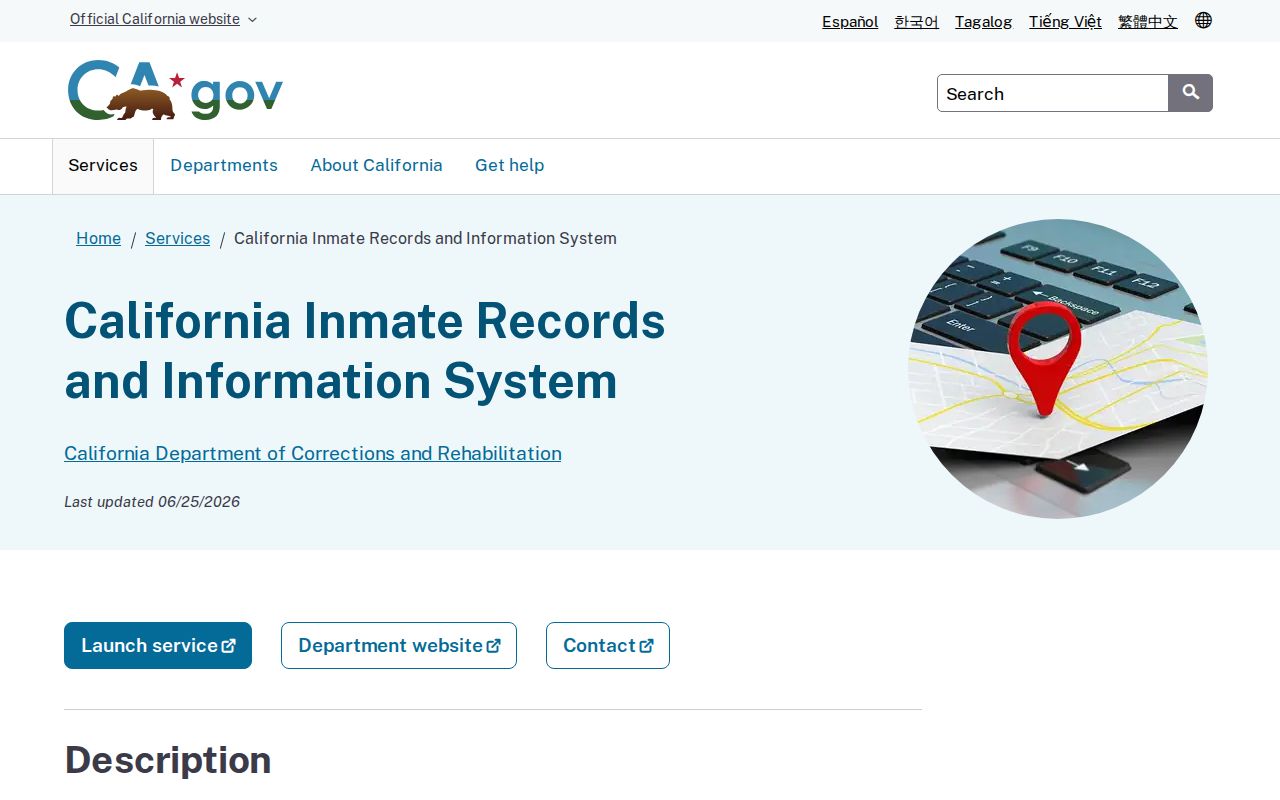
- For a state-prison case, search CDCR CIRIS by CDCR number when possible, or by name with age and commitment-county details.
- Use the exact field label shown on the live CDCR record. California materials in this research emphasize parole-eligible dates and Board of Parole Hearings dates/outcomes more clearly than a universal projected-release-date field.
- Register with VINELink Check if the person is still in a covered custody feed and a release alert would help track the change.
- For a federal sentence, use BOP. For immigration custody after a transfer or detainer, use ICE's locator and DHS-VINE.
Good-Time Credit and Release Computation
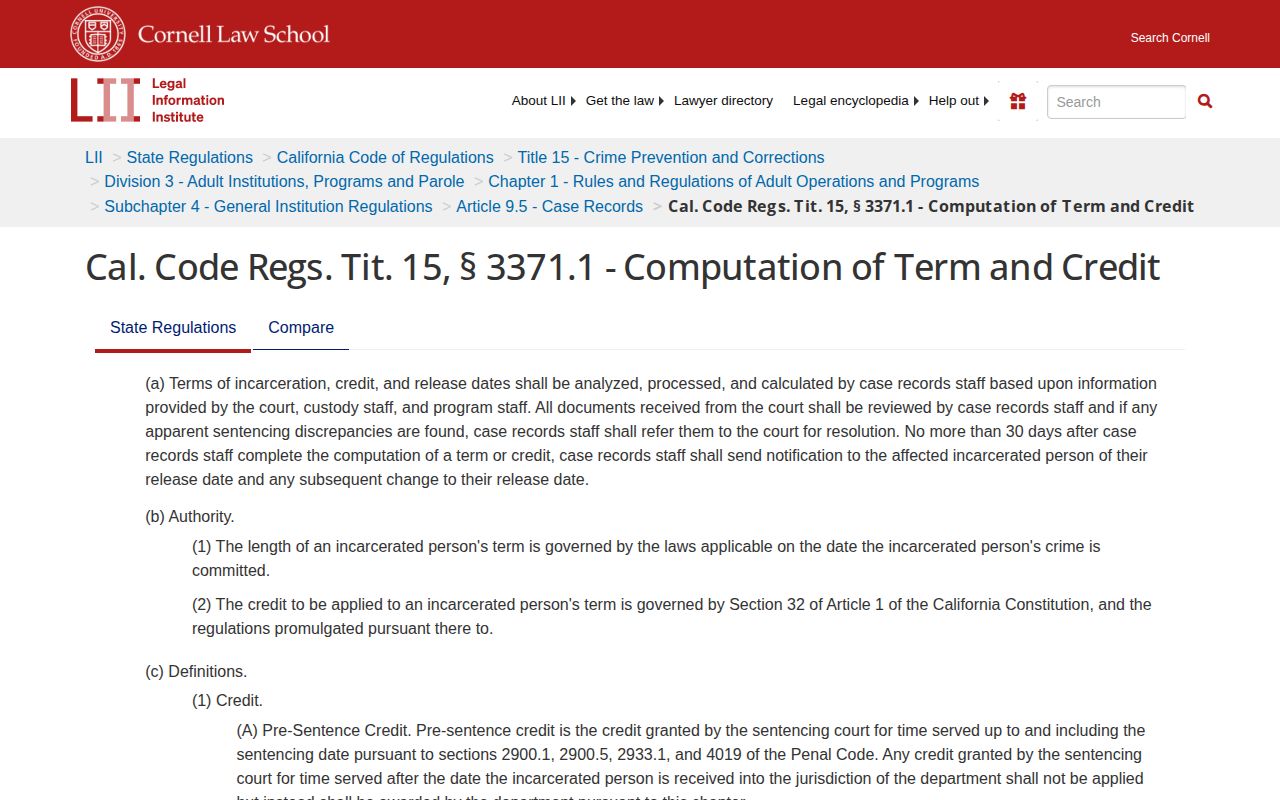
California release dates are not computed with one simple countywide formula. CDCR state-prison dates use case-records processing, sentence terms, presentence credits, postsentence credits, vested credits, administrative credits, dead time, and legal changes. Title 15 section 3371.1 describes how terms, credits, and release dates are analyzed and calculated by case-records staff based on court and CDCR information.
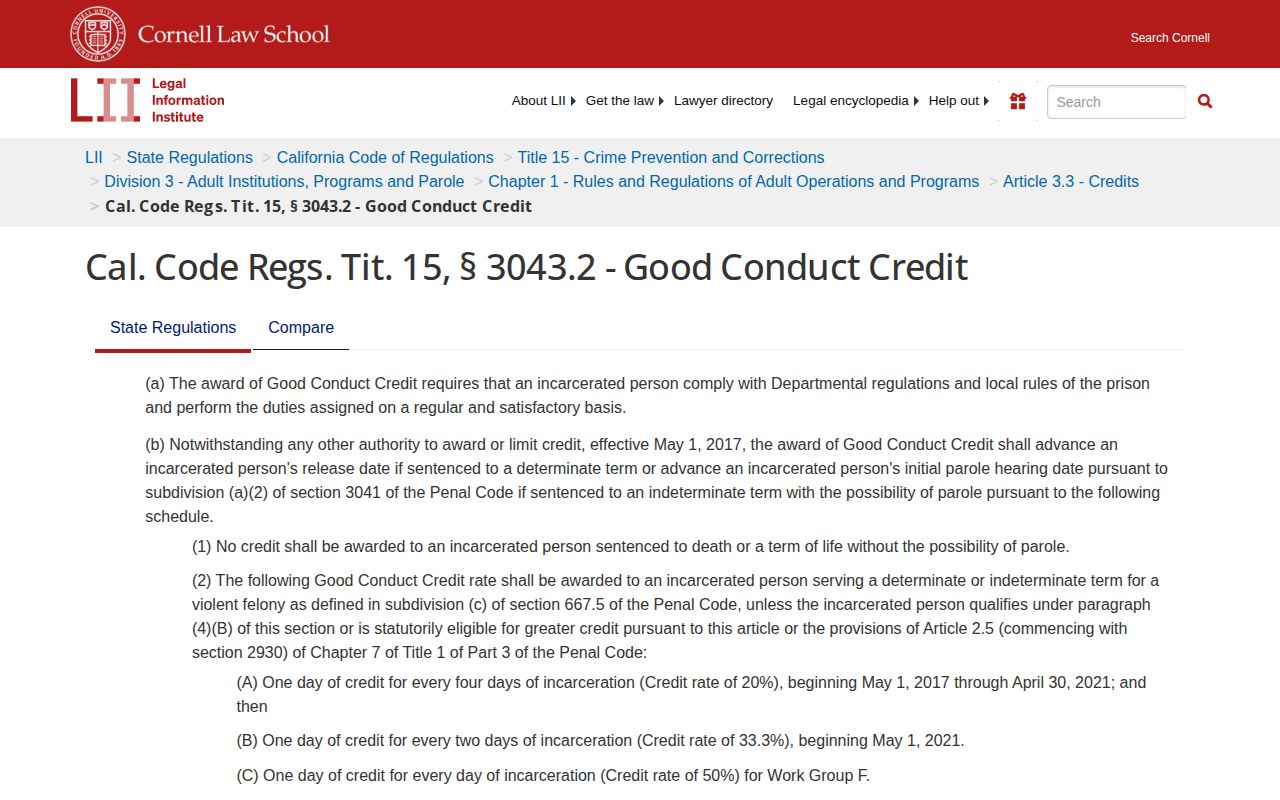
CDCR good conduct credit is governed by title 15 section 3043.2 and related statutes. The regulation ties credit to compliance with CDCR rules and satisfactory assigned-duty performance. It can advance a determinate release date, or for certain indeterminate sentences, advance an initial parole hearing date under the regulation's schedule. A parole-eligible date is not the same as being released.
Monterey County Jail Credit Rules
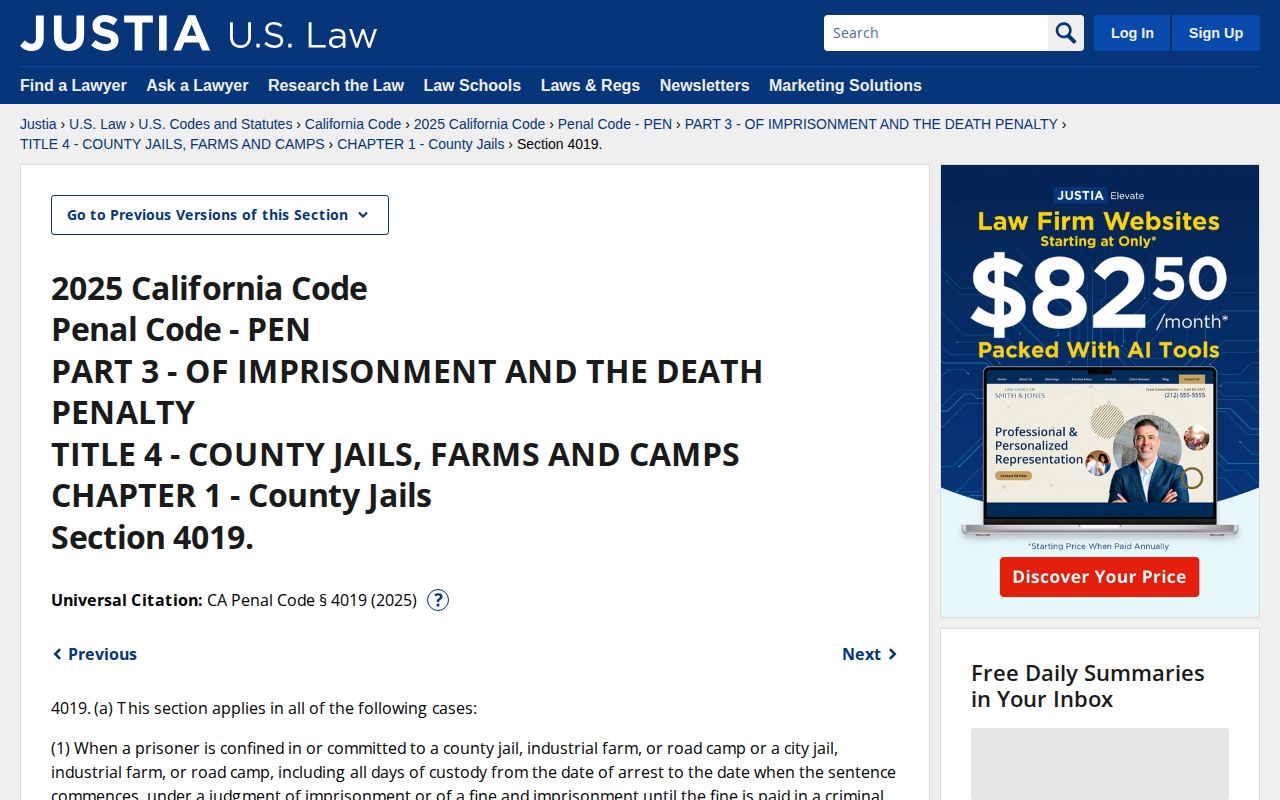
County jail credits are separate from CDCR state-prison credits. Penal Code section 4019 applies to county jail and related local custody settings and provides conduct-credit deductions tied to satisfactory labor and compliance with rules. For a Monterey County Jail sentence, the court sentence, jail credits, warrants, holds, and Sheriff's records are usually more relevant than CDCR's state-prison calculation.
The Work Alternative Program adds a local Monterey angle. The Sheriff's page says people sentenced by the court to serve 40 days or less may apply, that acceptance is at Sheriff's discretion, and that accepted participants can earn good time/work time credits. Participants must call immediately after court with days sentenced, surrender date, and case number. That means some short local sentences may have a program and credit path rather than a continuous overnight jail stay.
Why a Projected Release Date Changes
A release date can move after the first calculation. Treat any public date as a snapshot until the responsible agency confirms the final release.
| Change factor | Why it matters |
|---|---|
| Good-time or work-time credits | Credits may advance a local jail or CDCR date when the person is eligible and remains in compliance with the applicable rules. |
| Credit loss or restoration | Discipline, rule violations, or later restoration can affect CDCR or local calculations. |
| Court paperwork | Amended abstracts, minute orders, resentencing, or corrected credits can require a new calculation. |
| Detainers, warrants, or holds | A person may finish one custody term but remain held or be transferred because another agency has a lawful hold. |
| Parole eligibility or BPH outcome | For indeterminate or suitability cases, a hearing or eligibility date is not the same as actual release. |
| Transfer to CDCR, BOP, or ICE | The release-date source changes when the person leaves Monterey County Jail for another custody system. |
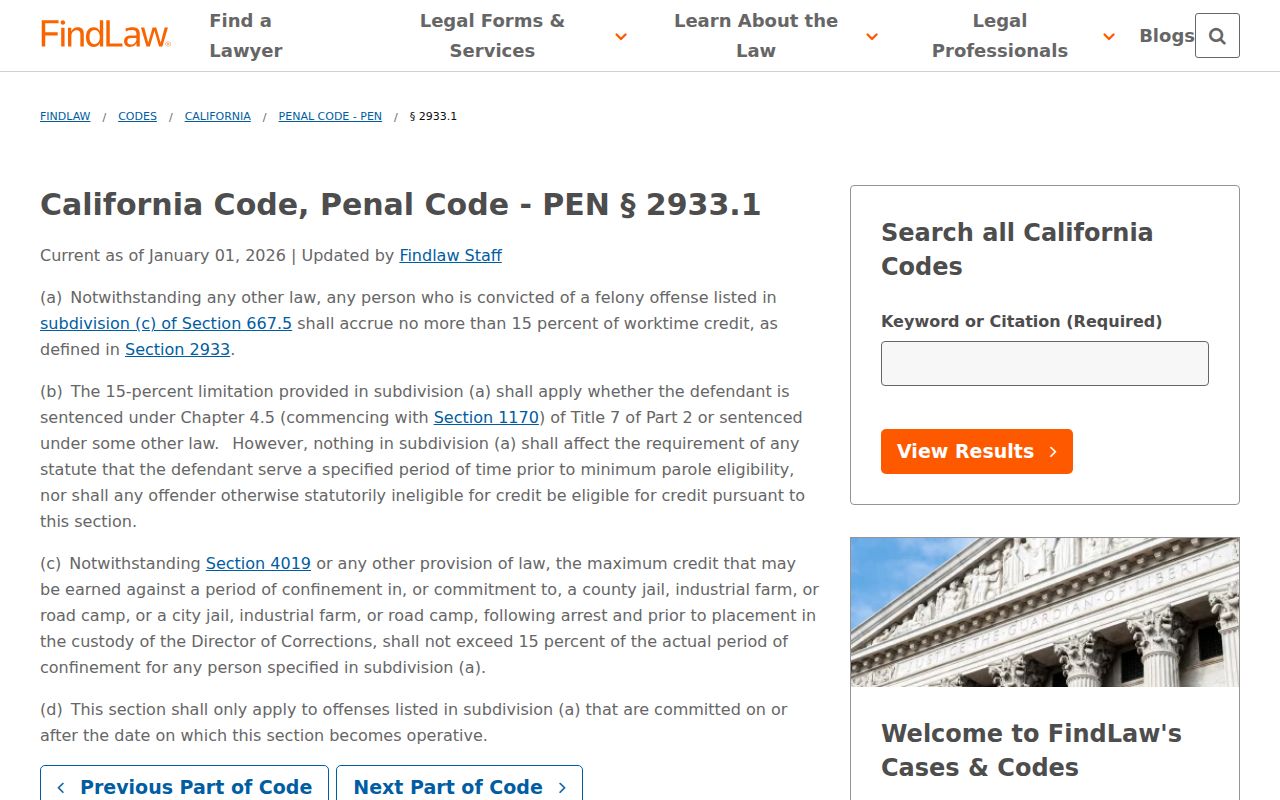
The California "85 percent" rule is also narrower than many summaries imply. Penal Code section 2933.1 limits worktime credit to no more than 15 percent for violent felonies listed in Penal Code section 667.5(c). It does not create a universal release-date formula for every Monterey County or CDCR case.
Parole-Eligible Dates Are Not Release Dates
California public materials in this research emphasize parole-eligible dates and Board of Parole Hearings dates or outcomes for many CDCR records. That distinction is important for Monterey County because CTF and SVSP are state prisons located in the county. A person housed in Soledad may have a parole-eligible date, a hearing date, or a suitability result, but those entries do not necessarily mean the person has an actual release date or has left custody.
Penal Code section 3041 governs parole-release-date consideration for many indeterminate-sentence cases, and BPH materials explain that parole consideration depends on the sentence, offense, eligibility basis, and hearing outcome. If CIRIS or BPH shows a hearing or eligibility date, record the exact label and verify whether the person is still in CDCR custody, was found suitable, had a proposed grant become final, or was released to DAPO supervision.
Confirming a Release Date
For a Monterey County Jail case, confirm through the jail information line, Sheriff's records channels, and the court case. The Sheriff's public-records path can be used to request disclosable booking and release details, including the time and manner of release when available under Government Code section 7923.610. The court record can explain bail, sentencing, probation, remand, dismissal, or completion events that caused the release.
For a CDCR case, CIRIS and CDCR records are the state-prison starting point. Use the Board of Parole Hearings only when the issue is parole eligibility, suitability hearing schedule, or hearing outcome. Use DAPO after release when the person is on state parole. Use VINE as a notification layer, not as the final sentence calculation.
A pretrial detainee in Monterey County Jail may have no projected release date because the next event is controlled by bail, a court order, case disposition, or a hold. A sentenced jail inmate may have a local date that depends on sentence length, court credits, Penal Code section 4019 conduct credits, and any new warrants or detainers. A Work Alternative Program participant may have a program completion path rather than a continuous jail stay.
A CDCR inmate at CTF or SVSP has a different calculation. CDCR case-records staff process the court documents and credits. The public CIRIS record may show current location, admission date, commitment county, and BPH dates or outcomes, but a parole-eligible date or hearing date should not be rewritten as guaranteed release. If the date is tied to a BPH proceeding, confirm whether the decision became final and whether DAPO supervision started after release.
A transfer can reset the question. If the person leaves Monterey County Jail for CDCR, BOP, or ICE, the projected-release source changes with the receiving system. The Monterey County court file may still explain the sentence or transfer, but the final release date must come from the agency holding the person.